Most iridium-reduction results stop at a single small cell. The EU project PROMET-H2 (2020–2024) set itself a harder test: build a pressurised PEM electrolyser stack at a much lower capital cost, without giving up performance or durability. Every material had to earn its place in that stack.
We were the partner responsible for scaling up one of the anode catalysts. This article summarises what the project has made public, what our role was, and what it teaches about moving ultra-low iridium catalysts out of the lab.
The problem PROMET-H2 tackled
PEM electrolysis is compact and responds well to fluctuating renewable power. It also depends on iridium, one of the scarcest elements in industrial use, and on expensive stack components. At the start of the project, PEM electrolyser CAPEX was typically €1,000–1,500 per kW. PROMET-H2 aimed to bring that down to €500–700 per kW by combining new catalysts, cheaper components, thinner membranes and a new stack design.
The project, coordinated by DLR, first tested fully CRM-free anode catalysts. They showed promise but were still far behind iridium-based catalysts. The consortium therefore chose the drastic-reduction route: keep iridium, but use far less of it.
Two candidates, one choice for the stack
Two ultra-low iridium anode catalysts made the shortlist: one from us and one from a research partner. The project target was demanding: 2 A/cm² at 1.9 V with only 0.2 mg of iridium per cm², sustained for 1,000 hours.
According to the final report on CORDIS:
- The best project MEA reached 1.81 V at 2 A/cm² with 0.2 mg Ir/cm² and passed a 1,000-hour test at constant current.
- Research partner Forschungszentrum Jülich measured similar performance at 0.2 mg Ir/cm² with CENmat's catalyst.
- The consortium selected CENmat's catalyst to produce the MEAs for the stack, citing its activation behaviour at MEA level and its scalability potential.
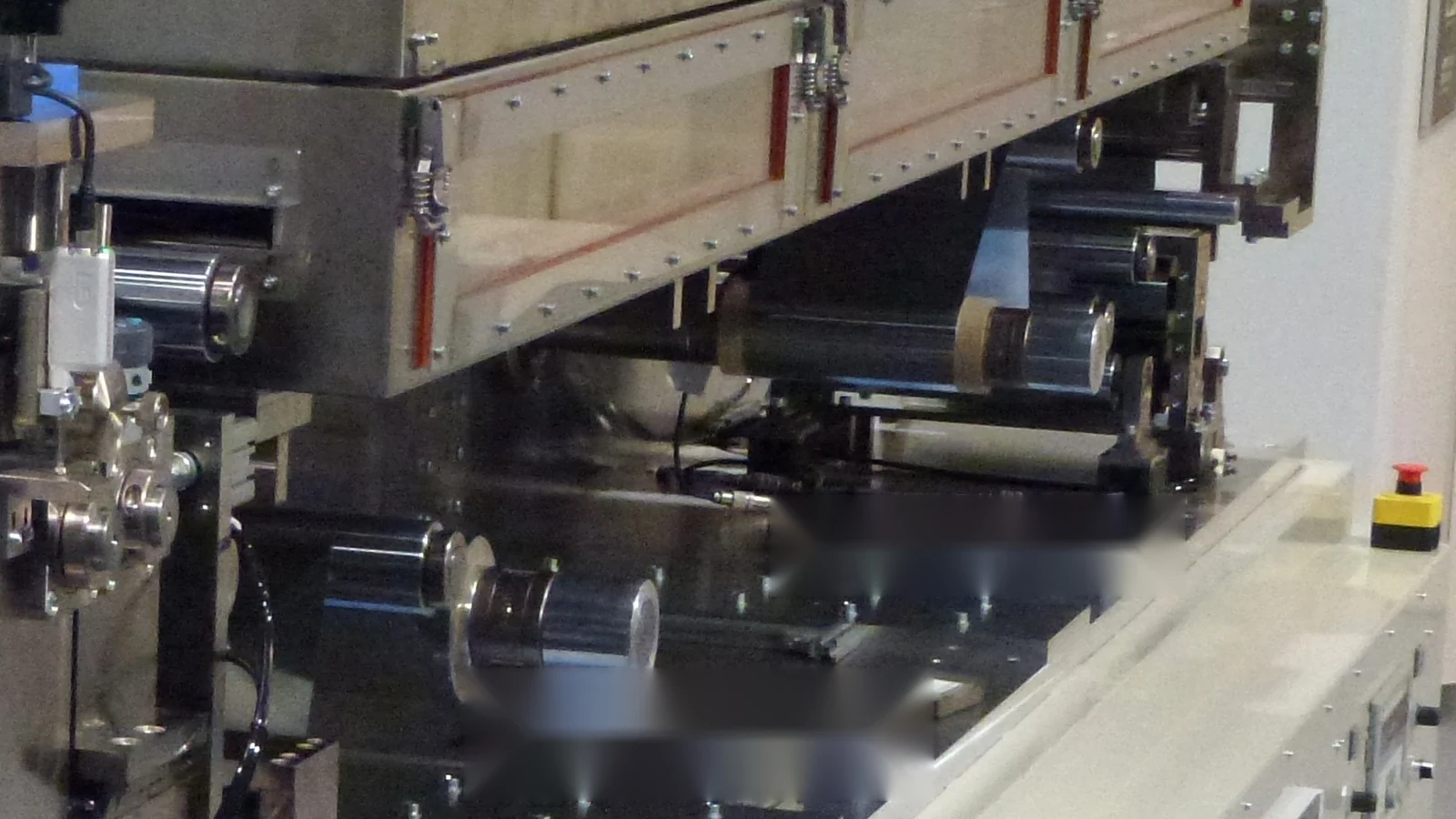
- The report also notes that CENmat scaled up the highly active catalyst while keeping its quality high.
That last point is easy to overlook. A catalyst that performs well in a 5 g lab batch but changes character at kilogram scale is of no use to a stack builder. In PROMET-H2, scalability was a selection criterion, not an afterthought.
What the stack achieved
At stack level, the project reported:
- Iridium content in the catalyst layer cut by a factor of 10, according to the project coordinator in the CORDIS news article.
- Stack CAPEX 21 % lower than a reference stack built with state-of-the-art materials.
- Planned validation at a renewable methanol site with 25 kW of hydrogen production capacity.
- 12 peer-reviewed publications and presentations at 33 international conferences by the end of the reporting period.
We presented our catalyst development at PROMET-H2 workshops, including a 2022 session on catalyst scale-up for water electrolysers and the project workshop at the European Hydrogen Energy Conference (EHEC) 2024 in Bilbao.
Related peer-reviewed work: one-step catalyst production
Scalable production is also the theme of a DLR-led paper with a CENmat co-author: “Rapid Scalable One-step Production of Catalysts for Low-Iridium Content Proton Exchange Membrane Water Electrolyzers” (S. Venkatesan, S. S. Ambu, T. Morawietz et al., with A. S. Gago and K. A. Friedrich, Advanced Energy Materials 15 (2025) 2401659, open access). The authors make anode catalysts in a continuous one-step flame-spray process. With 0.2 mg Ir/cm² in the catalyst layer, the cells showed up to four times the activity of a commercial iridium reference and stable operation over 2,000 hours, at roughly a tenth of the iridium loading typical of today's state of the art.
What this means for PEM buyers
Three lessons carry over to anyone qualifying ultra-low iridium materials:
- Ask for MEA-level data at the target loading, not powder activity alone.
- Ask who else has measured it. In PROMET-H2, an independent partner lab reproduced the performance.
- Ask about batch size. Scalability decided the stack choice.
Our current ultra-low iridium catalyst, OXYGN-M™, builds on this experience: 1.86 V at 2 A/cm² with 0.2 mg Ir/cm² and more than 1,000 hours at 2 A/cm² without degradation. It is described in our OXYGN-M article and in our summary of the peer-reviewed 2.82 A/cm² anode result. Specifications are on the OXYGN PEM product page, and you can request samples. More on the project is on our PROMET-H2 page.
PROMET-H2 received funding from the European Union's Horizon 2020 research and innovation programme under grant agreement No 862253.