
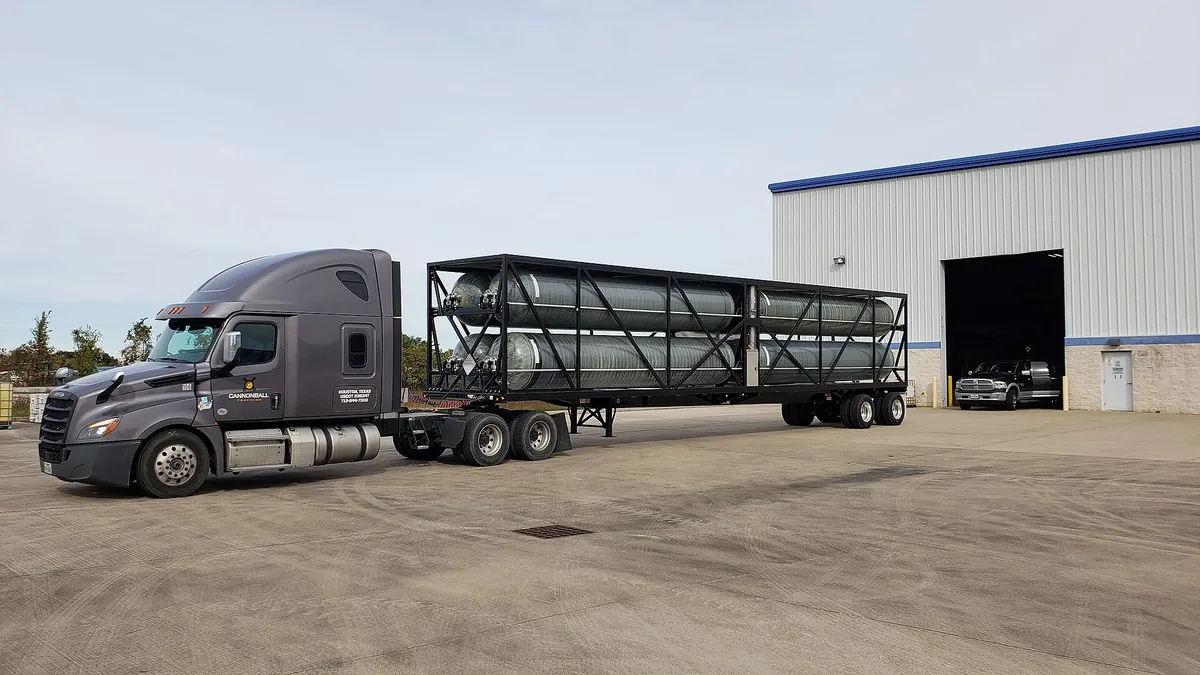
Choosing Between On-Site Electrolysis and Delivered Hydrogen is becoming a decisive topic for organisations planning green hydrogen capacity. At CENmat, we work with industrial partners to turn technical ambition into bankable projects. This guide outlines practical considerations around on-site production, truck-in hydrogen, and related commercial decisions.
Why this matters for buyers and partners
European industry is under pressure to cut emissions while remaining competitive. Whether the driver is process heat, chemical feedstock, or maritime fuel pathways, electrolysis technology choices shape cost, delivery timelines, and regulatory eligibility. Teams evaluating logistics need clarity on performance envelopes, materials risk, and how a vendor supports scale-up from pilot to multi-megawatt deployment.
We focus on re-engineering electrolysis at materials, component, stack and plant level. Our HYScale AEM approach targets high current density without critical raw materials dependence, while OXYGN addresses PEM scalability by reducing iridium loadings without compromising durability. Learn more about our approach on the About Us page and explore product lines on the homepage products section.
Technical and commercial checkpoints
Procurement and engineering stakeholders should align early on system boundaries: stack-only versus balance-of-plant, efficiency reporting basis, and acceptance tests under representative duty cycles. For on-site production, request evidence of durability under dynamic load, documented quality controls for membranes and catalysts, and transparent assumptions behind levelised cost of hydrogen estimates.
Regulatory context also matters. EU rules on renewable fuels of non-biological origin (RFNBOs), Delegated Acts on additionality and temporal correlation, and sector instruments such as FuelEU Maritime influence offtake structures. Cross-check your compliance roadmap with technical FAQ topics on our FAQ and keep documentation ready for auditors and lenders.
Implementation patterns that reduce risk
Successful programmes often start with a scoped pilot: clear KPIs, shared data protocols, and a predefined decision gate for scale-up. Partnering models can include joint development, materials qualification with stack OEMs, or site-specific integration studies. When discussing truck-in hydrogen, insist on spare-parts strategies, training, and service response times that match your uptime targets.
Industrial heat users should map hydrogen demand profiles against electrolyser turndown and storage options. Maritime and port stakeholders need to size capacity for bunkering logistics and fuel switching pathways. In all cases, materials choices — membranes, ionomers, and oxygen evolution catalysts — determine recyclability, CRM exposure, and long-term OPEX.
How CENmat can support your next step
If your organisation is preparing an RFQ, evaluating AEM versus PEM pathways, or seeking a technology partner for a regional hydrogen project, we can help structure the technical conversation. We combine materials expertise with electrolyser system thinking aimed at scalable, economical, and truly green hydrogen production.
Ready to discuss your project? Visit our About Us page to get in touch, review HYScale and OXYGN products, or browse more insights on the CENmat blog.
For related reading, see also our articles on industrial heat, maritime investment, and the EU’s green hydrogen definition — and reach out when you are ready to align specifications with deployment realities around purity.
Operational considerations in practice
Operators planning green hydrogen capacity should treat electrolyser selection as a multi-year asset decision, not a one-off equipment purchase. Beyond nameplate efficiency, teams need a view of degradation trajectories, membrane and catalyst replacement intervals, and how balance-of-plant design affects specific energy consumption. For procurement programmes, documentation quality — from factory acceptance tests to site commissioning protocols — often separates bankable proposals from optimistic slides.
Power market design also shapes outcomes. Time-of-use tariffs, grid connection queues, and the ability to modulate load against renewable generation profiles influence utilisation and levelised cost. When renewables are co-located, control strategies must protect stack health while capturing low-cost electrons. Our technology development emphasises durable materials and cell designs suited to demanding duty cycles, which is central to economical green hydrogen at industrial scale.
Commercial next steps
Organisations typically progress from a technical briefing to a scoped feasibility or pilot discussion. Bring your site constraints, purity requirements, target capacity, and offtake assumptions. We can then map them against HYScale and OXYGN capabilities and outline a realistic path from inquiry to demonstration. Visit About Us to start a conversation, review the products overview, or continue learning via the FAQ and blog.
Across Europe, demand for credible electrolysis partners continues to grow as industrial heat users, chemical producers, and maritime fuel planners convert strategy into capital projects. Clear specifications, disciplined vendor due diligence, and materials-aware technology choices remain the most reliable way to reduce delivery risk while advancing decarbonisation goals tied to procurement.
Key takeaways
- Define on-site production criteria before vendor shortlisting.
- Validate truck-in hydrogen claims with duty-cycle and durability data.
- Align offtake and compliance early with EU frameworks.
- Use pilots and clear KPIs to de-risk scale-up.
- Engage CENmat via About Us for commercial discussions.